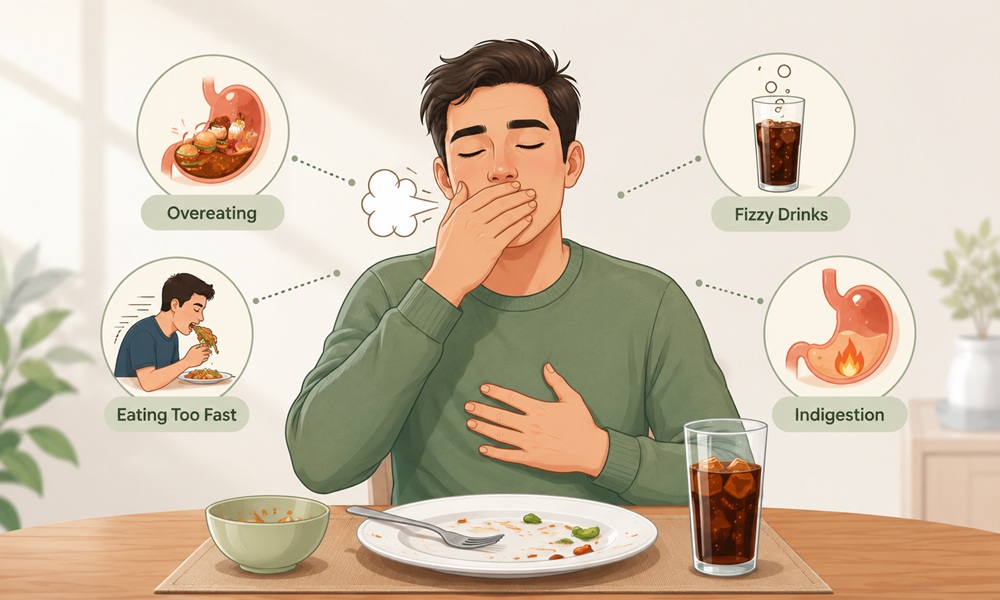
A burp (medically, a belch) is simply your body venting swallowed air. Most people burp up to a few dozen times a day without a problem. After a meal it is even more common, because eating and drinking are the main ways air enters the stomach.
Below are the most common reasons you burp after eating — from the everyday to the ones worth checking.
First, what is actually happening when you burp?
When you eat or drink, you swallow small pockets of air along with food. This air collects at the top of the stomach. Once enough builds up, a valve called the lower oesophageal sphincter relaxes and the air travels back up the food pipe and out of the mouth. That is a normal gastric belch.
Lesser-known fact: not all burps come from the stomach. In supragastric belching, air is sucked into the food pipe and pushed straight back out within a second — it never reaches the stomach. This is a learned, often stress-linked behaviour rather than a digestive disease, and it is frequently missed. It is one reason some people burp dozens of times in a row but have a normal scan.
9 common causes of burping after meals
- Eating or drinking too fast. Rushing means you gulp more air with each bite. This is the single most common cause.
- Fizzy drinks. Sodas, sparkling water, and beer release carbon dioxide directly into the stomach, which then comes back up.
- Talking while eating. Chatting, laughing, or eating on the move all increase swallowed air (aerophagia).
- Chewing gum and hard sweets. Constant chewing and sucking pulls in extra air through the day.
- Gas-forming foods. Beans, lentils, onions, cabbage, broccoli, and whole grains ferment in the gut and add to gas and belching.
- Sugar alcohols. Sorbitol and xylitol in sugar-free gum and ‘diet’ products are poorly absorbed and ferment, producing gas.
- Acid reflux (GERD). When stomach acid rises, many people swallow repeatedly to clear it — which brings in more air and triggers more burping, often with a sour taste or heartburn.
- pylori infection. This common stomach bacterium can cause persistent belching, bloating, and upper-tummy discomfort, and is treatable with antibiotics.
- Anxiety and habit. Stress speeds up breathing and swallowing, and supragastric belching can become an unconscious habit during tense moments.
Normal vs concerning burping at a glance
| Likely harmless | Worth a check-up |
| Occasional belching after big or fizzy meals | Burping many times in a row, daily, for weeks |
| Goes away on its own | Comes with heartburn or a sour/bitter taste |
| No pain, no other symptoms | Pain, bloating, nausea, or vomiting |
| Linked to a clear trigger (soda, rushing) | Unexplained weight loss or trouble swallowing |
How to burp less after eating
- Eat slowly and chew thoroughly — aim to put your fork down between bites.
- Cut back on fizzy drinks and skip the straw, which pulls in air.
- Avoid gum and sugar-free sweets if you burp a lot.
- Eat smaller, more frequent meals instead of one heavy one.
- Take a gentle 10-minute walk after eating to help digestion.
- If reflux is the trigger, avoid lying down for 2–3 hours after meals and raise the head of your bed.
Constant, repetitive burping: when it’s a habit
If you burp many times in quick succession — often when stressed, anxious, or simply focused on it — the cause is frequently supragastric belching rather than a stomach disease. Air is repeatedly drawn into the food pipe and pushed straight back out as a learned, often unconscious habit.
The reassuring part is that this pattern is not dangerous, and it usually improves without medication. Slow, diaphragmatic (belly) breathing, keeping the mouth gently relaxed, and lowering day-to-day stress all help break the cycle. Some people benefit from breathing retraining or speech-therapy techniques. Because constant belching can look alarming, this pattern is often misread as a serious gut problem — so describe it clearly to your doctor, including when and how often it happens.
| SEE A DOCTOR IF…
Burping is constant or keeps you from daily life; or it comes with any of: heartburn most days, difficulty or pain when swallowing, ongoing nausea or vomiting, blood in vomit or black stools, chest pain, or unexplained weight loss. These can point to reflux disease, an ulcer, H. pylori, or rarely something more serious that needs evaluation. |
Frequently asked questions
Is burping after every meal normal?
Burping after meals is normal, but burping after every single meal, every day, may signal too much swallowed air, reflux, or a habit pattern. If it bothers you, try the slow-eating tips first.
Why do I burp but feel no relief?
Repeated burping that does not relieve bloating often points to supragastric belching (a swallowing habit) or reflux, rather than trapped stomach gas. A doctor can tell these apart.
Can burping be a sign of a heart problem?
Burping itself is digestive, but if belching comes with chest pressure, breathlessness, sweating, or arm or jaw pain, treat it as a possible cardiac emergency and seek help immediately.
Does drinking water cause burping?
Gulping water quickly, or drinking sparkling water, can add air. Sipping still water slowly usually does not.
Note: This article is general health information, not medical advice. See a qualified doctor for diagnosis and treatment.